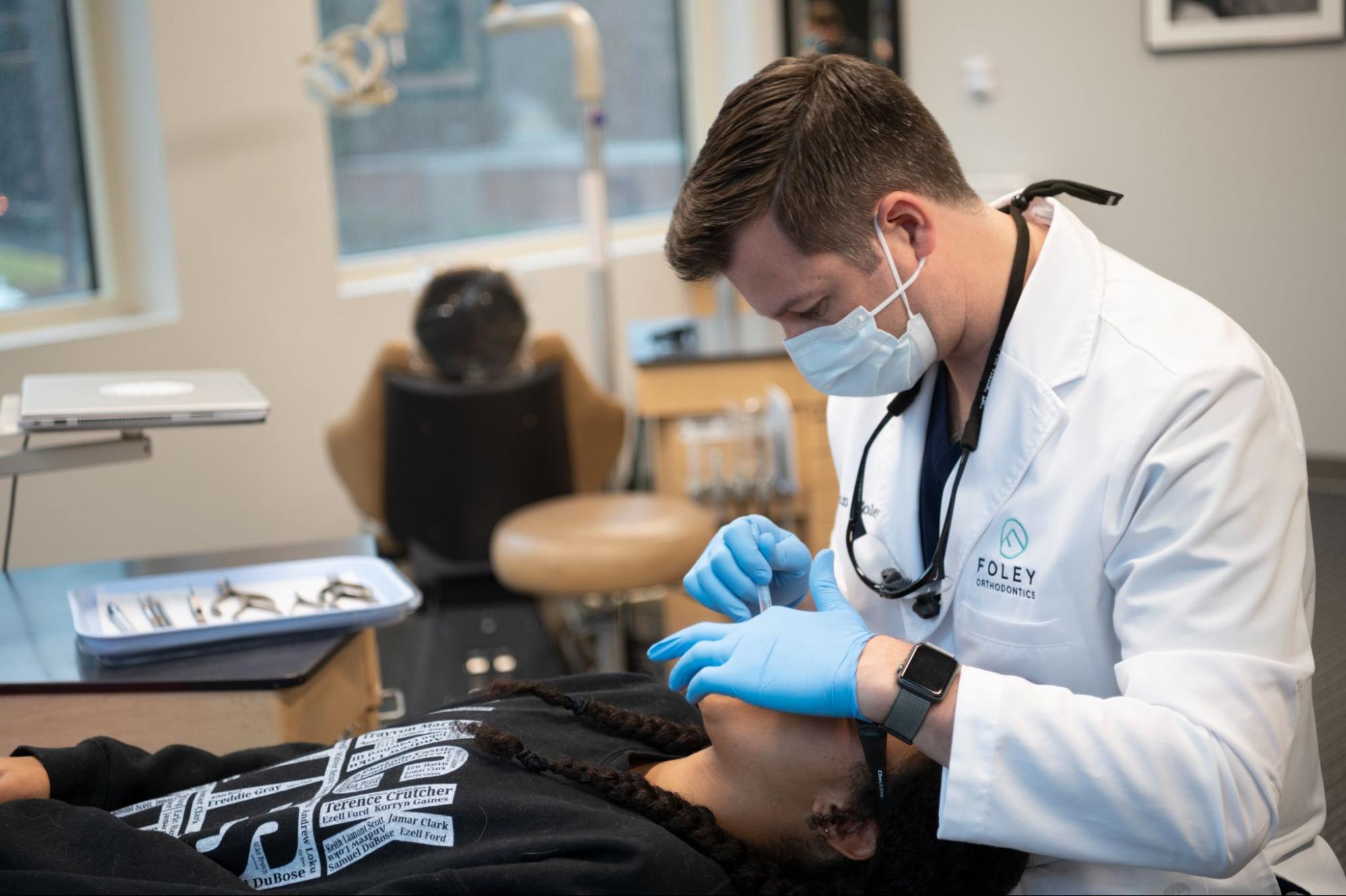
An overbite is one of the most common bite issues we see, and it is also one of the most fixable. If you have noticed that your upper front teeth sit well in front of your lower teeth, you are probably wondering how to fix an overbite and whether it is something to worry about. The short answer is that overbites are very treatable at almost any age, and the right approach depends on what is causing yours.
What Is an Overbite?
An overbite is the vertical overlap of your upper front teeth over your lower front teeth. A small amount of overlap is normal and healthy. It becomes a concern when the upper teeth cover too much of the lower teeth, sometimes to the point where the lower teeth bite into the roof of the mouth. Orthodontists usually sort overbites into two types: dental, where the teeth are tilted or positioned poorly, and skeletal, where the jaws themselves are misaligned. Knowing which type you have is the first step, because it changes how the overbite is corrected.
What Causes an Overbite?
Overbites often run in families, since jaw shape and tooth size are inherited. They can also develop from childhood habits like prolonged thumb sucking or pacifier use, which push the upper teeth forward over time. Other contributors include missing or crowded teeth, teeth grinding, and tongue thrusting. In children, an overbite can also reflect uneven jaw growth, which is exactly why early evaluation matters. Catching a developing bite issue while the jaw is still growing gives an orthodontist more ways to guide it.
How to Fix an Overbite: Your Treatment Options
There is no single fix, because the best option depends on your age and whether the overbite is dental or skeletal. Here are the approaches an orthodontist will consider.
Braces
Traditional braces remain the most reliable way to correct an overbite. By moving teeth into better positions and using elastics to adjust the bite, braces handle everything from mild to complex overbites. They are especially effective when teeth need to move significant distances.
Clear Aligners
For many mild to moderate overbites, clear aligners can do the job discreetly. Aligners use precise, staged movements and, in some cases, small attachments to shift the bite. If you want to know how the timeline compares, our guide on how long clear aligners takes walks through the factors involved.
Palatal Expanders and Growth Guidance
In growing children, an orthodontist can use appliances like a palatal expander to influence how the jaws develop before the overbite becomes severe. This early, growth-based approach can reduce or even prevent the need for more involved treatment later.
Surgery for Severe Skeletal Cases
When an overbite is caused by a significant jaw discrepancy in an adult whose growth is complete, orthodontics alone may not be enough. In those cases, treatment may combine braces with jaw surgery to reposition the jaw. This is reserved for the most severe situations, and most overbites never require it.
Can You Fix an Overbite Without Braces?
Sometimes, yes. Clear aligners are a braces-free path for many patients, and in growing children, appliances and growth guidance can correct a developing overbite without traditional brackets. What you should be cautious about are do-it-yourself or mail-order solutions that skip a professional exam. Moving teeth without understanding whether your overbite is dental or skeletal can cause harm. A proper diagnosis is what makes braces-free options safe and effective.
What About Underbites and Other Bite Issues?
An overbite is just one type of bite misalignment. Underbites, crossbites, and open bites each call for their own approach. If you are dealing with a lower jaw that sits forward, especially in a child, our article on treating a child’s misaligned jaw covers that situation in detail.
When to See an Orthodontist
If an overbite affects how you chew, speak, or feel about your smile, or if you are noticing one developing in your child, it is worth a professional evaluation. Dr. Foley examines the teeth and jaws together to pinpoint the cause before recommending treatment. As a board-certified orthodontist in Cary, Dr. John Foley treats overbites in children, teens, and adults every day, and the consultation is a no-obligation way to learn your options. You can read more about his background before you visit.
Frequently Asked Questions
What is an overbite?
An overbite is the vertical overlap of the upper front teeth over the lower front teeth. A slight overlap is normal. It becomes a concern when the upper teeth cover too much of the lower teeth.
What causes an overbite?
Overbites are often inherited, but they can also develop from prolonged thumb sucking or pacifier use, teeth grinding, tongue thrusting, or crowded and missing teeth. In children, uneven jaw growth can also be a factor.
Can an overbite be fixed without braces?
Often yes. Clear aligners correct many mild to moderate overbites, and in growing children, appliances and growth guidance can help. The key is a professional diagnosis first, so the right method is chosen and your teeth are moved safely.
How long does it take to fix an overbite?
It varies with the severity and the method. Many cases take roughly 12 to 24 months, while milder corrections can be faster. An orthodontist gives you a personalized timeline after examining your bite.
Is an overbite only a cosmetic problem?
No. Beyond appearance, an untreated overbite can lead to uneven tooth wear, jaw discomfort, and difficulty chewing. Correcting it supports both your oral health and your smile.
Can adults fix an overbite?
Yes. Adults correct overbites successfully with braces or clear aligners. Only severe skeletal cases may need a combined surgical approach, and those are uncommon.