
Choosing between clear braces and clear aligners is one of the most common decisions patients face when exploring discreet orthodontic treatment. Both are subtle, both straighten teeth beautifully, and both have their own strengths. The right pick depends on your case, your lifestyle, and how much flexibility you want during treatment.
Here’s an honest, side-by-side look to help you decide.

What Are Clear Braces and Clear Aligners?
Clear braces and clear aligners are two discreet ways to straighten teeth. Clear braces use tooth-colored ceramic brackets bonded to each tooth and connected by a thin archwire. Clear aligners are a series of custom, BPA-free trays worn in sequence to gently shift teeth. Many modern orthodontic practices offer both, so patients can pick what fits their smile and their life.
Both options are called “clear,” but they work in very different ways. Clear braces stay on your teeth around the clock. Aligners come out whenever you eat, drink, or brush.
That one difference changes almost everything about the experience. It affects comfort, cleaning, and how long treatment takes. It also shapes which cases each option can handle well.
The good news is that both treat many of the same concerns, including crowding, spacing, and bite correction. A board-certified orthodontist can walk you through which approach makes the most sense for your teeth, your schedule, and your goals.
How Do Clear Braces and Clear Aligners Move Your Teeth?
Clear braces and aligners get you to the same finish line, but they take different roads to get there.
Clear braces use ceramic brackets bonded to each tooth, connected by an archwire. That wire applies a steady, continuous force 24 hours a day, seven days a week. You can’t take it off, and that’s actually part of the appeal. The movement never pauses.
Clear aligners are a series of custom trays. You wear each tray for about one to two weeks, then switch to the next in the sequence. Each tray is slightly different from the last, nudging teeth into position step by step. For aligners to work, you need to wear them 20 to 22 hours per day, removing them only to eat, drink anything other than water, and brush.
Modern aligners also use small tooth-colored attachments bonded to certain teeth. These attachments give the trays extra grip for tougher movements like rotations and extrusions. Elastics can be added too, expanding what aligners can tackle.
Here’s how the visit cadence compares:
- Clear braces: adjustments every 4 to 6 weeks
- Clear aligners: check-ins every 6 to 8 weeks, with new trays provided in batches
The core mechanical difference is simple. Braces are fixed. Aligners are removable. Everything else, from comfort to compliance, flows from that one distinction. Working with a board-certified orthodontist gives you confidence that whichever option you choose, your plan is backed by advanced training and specialty credentials.
What Are the Benefits of Each Option?
Each option has real strengths. Here’s a straightforward look at both.
What Are the Benefits of Clear Braces?
- Always working. Nothing to take out, forget, or lose. Treatment moves forward 24/7.
- No compliance worry. Great for busy teens, frequent travelers, or anyone who doesn’t want to track wear time.
- Strong control for tougher cases. Clear braces excel with severe rotations, significant crowding, and bite correction.
- Reliable for extraction cases. When teeth need to be removed to create space, braces offer precise control over closing those gaps.
- Predictable outcomes. With a fixed appliance, your orthodontist directs every movement with wires and auxiliaries.
What Are the Benefits of Clear Aligners?
- Nearly invisible. Most people won’t notice you’re wearing them, which is a big draw for adults in professional settings.
- Removable for meals. Eat what you love. No food restrictions.
- Easier brushing and flossing. Pop the trays out and clean your teeth like you always have.
- Comfortable to wear. Smooth plastic means no bracket or wire irritation on your cheeks and lips.
- Fewer emergency visits. Nothing to break or come loose. If a tray cracks, you often move to the next one.
- Smoother for active lifestyles. Playing sports, singing, or giving presentations tends to feel more natural without brackets.
What Do Clear Braces and Clear Aligners Have in Common?
Both clear braces and clear aligners are discreet alternatives to traditional metal braces. Both can deliver stunning before-and-after results. And both are planned and monitored by an orthodontist at every step, so you’re never guessing about progress.
The best option really comes down to your case complexity and how your daily life fits with each approach.
How Do Clear Braces and Clear Aligners Compare Side by Side?
Here’s a quick reference comparing the two options at a glance.
| Feature | Clear Braces | Clear Aligners |
|---|---|---|
| Appearance | Tooth-colored brackets, visible up close | Nearly invisible |
| Comfort | Possible bracket irritation initially | Smooth plastic, minimal irritation |
| Treatment Time | Typically 18 to 24 months | Typically 12 to 18 months |
| Hygiene | Requires extra care around brackets | Easy, remove to brush and floss |
| Discipline Required | None, fixed in place | 20 to 22 hours daily wear |
| Staining Risk | Ligatures can discolor with coffee, tea, curry | Trays resist staining if cleaned properly |
| Best For | Complex cases, severe rotations, bite issues | Mild to moderate cases, image-conscious adults |
| Office Visits | Every 4 to 6 weeks | Every 6 to 8 weeks |
| Emergency Risk | Occasional loose brackets or wires | Rare, usually tray-related |
A few quick takeaways from this comparison:
- Treatment time often favors aligners for straightforward cases, but complex cases may finish faster with braces.
- Hygiene is almost always easier with aligners since you remove them to brush.
- Compliance is the make-or-break factor for aligner success. Braces don’t require any discipline on your part.
- Staining can affect clear braces more than aligners, especially the small rubber ligatures that hold the wire in place.
Which Option Is Right for You? Candidacy Guide
The honest answer is that it depends on your teeth and your lifestyle. Here’s a general guide to help you think it through.
Who Is a Good Candidate for Clear Braces?
Clear braces may be the better fit if you:
- Have severe crowding or spacing
- Need major bite correction (overbite, underbite, crossbite)
- Have significant tooth rotations that need precise control
- Are undergoing an extraction case
- Know you’d struggle to wear aligners 20 to 22 hours a day
- Want a “set it and forget it” option with no removable trays
- Play contact sports (with a mouthguard) and worry about losing trays
Who Is a Good Candidate for Clear Aligners?
Clear aligners may be a good fit if you:
- Have mild to moderate crowding or spacing
- Are an image-conscious adult or professional
- Want to eat without restrictions
- Prefer easier brushing and flossing
- Are a disciplined teen or adult who will stick to the wear schedule
- Travel often and need something portable
- Have special events where you’d want to go tray-free briefly
How Does Lifestyle Factor Into the Choice?
Think about your career, your social life, your eating habits, and how often you travel. A sales professional giving daily presentations might love the invisibility of aligners. A high school athlete with a packed schedule might prefer the no-worry nature of clear braces.
Some cases even benefit from a hybrid approach, starting with one and switching to the other partway through. This isn’t common, but it’s an option an orthodontist may raise if it suits your situation.
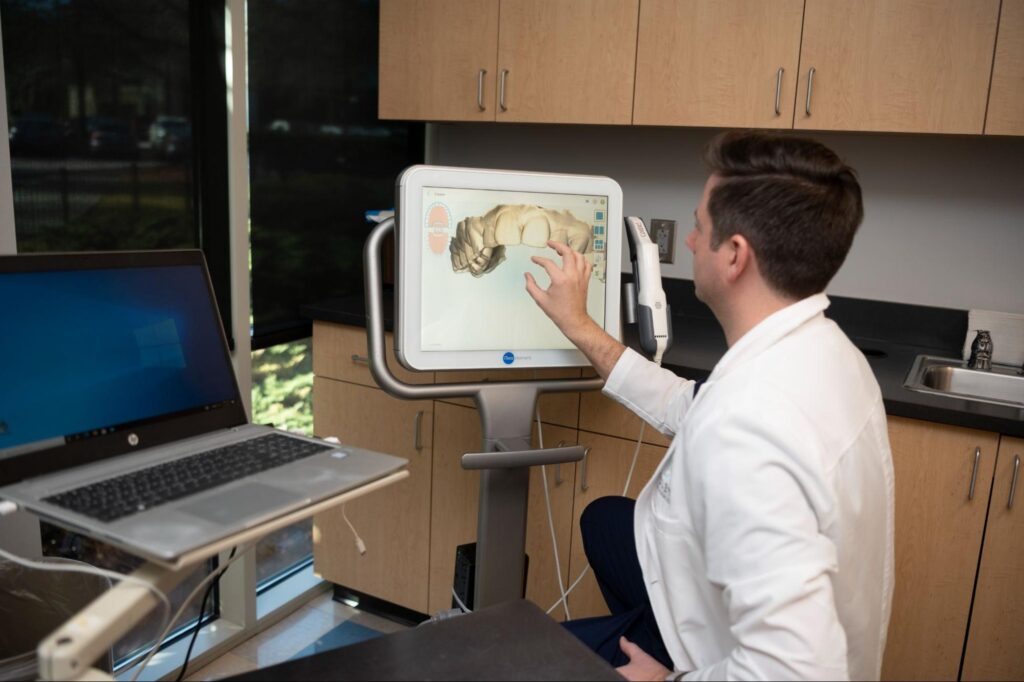
An in-person evaluation is the only way to confirm what’s truly right for you. During that visit, scans, photos, and a bite exam come together to shape a plan built around your anatomy and your goals.
Frequently Asked Questions
Why do people quit clear aligners?
Most people who stop wearing clear aligners do so because of compliance fatigue. Wearing trays 20 to 22 hours a day, cleaning them, and remembering them at every meal takes real discipline. Some patients also find early discomfort from new trays frustrating. The key is choosing aligners only if you know you’ll commit, and leaning on your orthodontist for support when motivation dips.
Do clear braces stain?
The ceramic brackets themselves resist staining very well. The small elastic ligatures that hold the wire in place, however, can yellow over time, especially with coffee, tea, red wine, and curry. The good news is these ligatures get changed at every adjustment visit, so any discoloration is temporary. Rinsing after meals and keeping up with regular cleanings helps a lot.
Can I switch between clear braces and aligners mid-treatment?
Yes, in some cases. If a patient starts with aligners but needs more precise control, an orthodontist may recommend finishing with braces. The reverse can happen too, where braces handle the heavy lifting and aligners polish the result. These hybrid plans are case-by-case and discussed during your evaluation.
Which option is faster for most cases?
Clear aligners often finish mild to moderate cases in 12 to 18 months, while clear braces typically take 18 to 24 months. That said, for complex cases, braces can sometimes be faster because they offer more direct control over tough movements. Timeline estimates are always individualized at your consultation.
Are clear aligners effective for teens?
Absolutely, when the teen is motivated. Many teen aligner plans include compliance indicators so parents and orthodontists can confirm the trays are being worn. For disciplined teens, aligners can be a fantastic option. For teens who tend to forget or lose things, clear braces are often the smarter pick.
What happens after active treatment ends?
Retainers protect every result, whether you finish with clear braces or clear aligners. Most patients wear a retainer full-time for a short period, then shift to nighttime wear long-term. Skipping retainer wear is the most common reason teeth shift back after treatment, so building the habit early really pays off. Your orthodontist will walk you through retainer types, cleaning tips, and replacement timelines so your new smile stays put for years to come.